Introduction
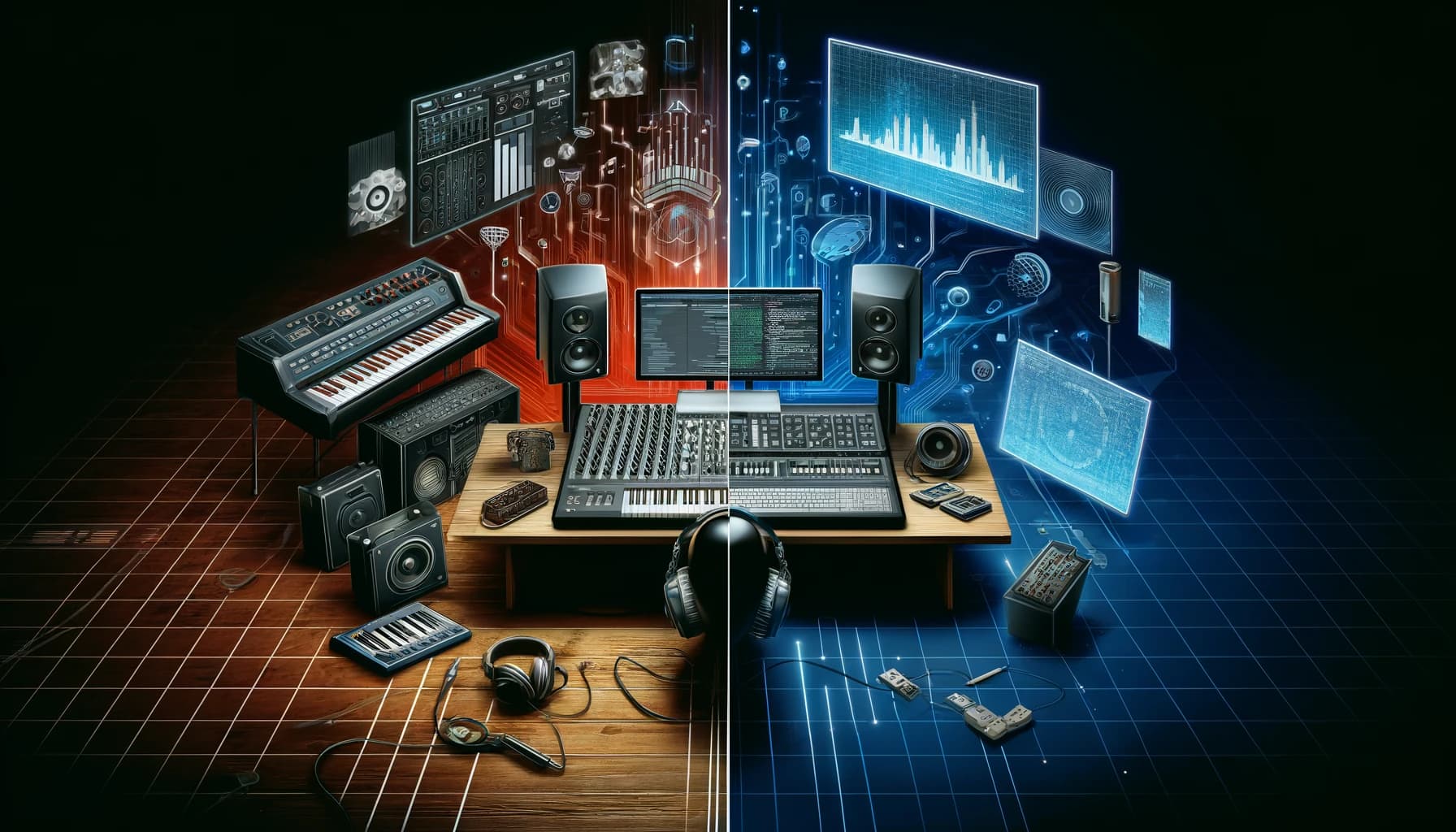
I've been deeply involved in music production as a hobby for several years and have been composing music since I was thirteen. In 2021, a new chapter began somewhat unexpectedly when I started studying IT, with a focus on frontend development. This journey began with a vocational course that I completed in 2023. From the moment I wrote my first piece of code, I found myself asking, "What can I create with this?"— a question which reminds me of my early days exploring music with a guitar in hand. The similarities between composing/producing music and developing applications are striking, and I believe that those with a background in music production might possess skills that are highly transferable to application development.
It's useful to consider both music and software as products aimed at engaging users, whether they are listening to a tune or navigating an app. In the music world, you might find yourself in the role of a producer or a songwriter, with many dabbling in both. While these roles might differ, I'd think they align with roles in software development, where songwriters mirror application designers and the creative part of the process, and sound engineers parallel programmers / software engineers with their technological prowess.
Iterative Processes
Both music production and software development benefit from iterative processes, where feedback loops are crucial. In music, this might mean tweaking a track based on how it sounds in different environments or after a break from listening, or it could be feedback from other musicians or focus groups that represent the consumer of the product - not unlike the way software might be adjusted after user testing or peer reviews. This iterative cycle, central to both fields, ensures continuous improvement, contributing to the overall quality of the final product.
Technical and Creative Fusion
In music production, you have complex software like DAWs, synthesizers, audio utilities like compressors, equalizers and so on, which blends technical knowledge with creative expression. Similarly, developing an application involves coding skills and the ability to design user-friendly interfaces and experiences. This fusion of the technical and the creative in both fields means that skills in one can enhance understanding and innovative potential in the other.
Component Integration
Just like testing individual musical elements and their integration into a song, software development often involves unit testing (testing individual components) and integration testing (ensuring all parts work together as expected). If you draw a line between these practices, you can see how thinking about systems as both standalone and interconnected components can be a cross-disciplinary skill.
Tools and Environment
Using tools like Ableton Live (my go-to DAW) requires learning complex software environments, and is not so unlike getting to grips with development environments or frameworks like, for example, Next.js (my go-to framework). This familiarity with complex systems can make transitions between music production and software development smoother, as the learning curve for new tools may be less steep for those who are already familiar with complex systems.
Plugins and Libraries
In music production, digital audio workstations (DAWs) are augmented by a variety of plugins, tools that extend the basic capabilities of the software. Whether it's adding a unique reverb, compressing audio, or synthesizing new sounds, producers must learn to leverage these tools effectively by consulting documentation or watching tutorials. This process mirrors how software developers utilize libraries and modules in programming.
Just as a musician might use a plugin to enhance a track, developers use libraries and packages to enrich their applications. For instance, in React development, libraries like TailwindCSS or Axios are not merely additional features but are integral for rapid development. Learning to integrate these tools effectively requires understanding their documentation, grasping their functionality, and applying them in the context of a larger project.
Problem Solving and Creativity
Both fields require a high degree of problem-solving skills and creativity. Whether it's finding a way to resolve a harmonic imbalance in a track, or debugging a tricky piece of code, the underlying thought processes — analytical thinking, creative problem-solving, and persistence — are remarkably similar.
Conclusion
To sum it up, the journey from music production to software development isn't just a shift from one type of creative expression to another; it's a transition between two fields that share fundamental processes, skills, and mindsets. Whether orchestrating the perfect harmony or crafting seamless code, both musicians and developers engage in a dance of creativity and technical precision. The skills honed in music production, such as iterative refinement, integration of components, and problem-solving, are invaluable in the realm of software development. If you have a background in music and are considering a dive into the digital world, remember that your skills are not just transferrable—they are a unique strength that can propel you towards innovative solutions and successful projects.